


When an individual undergoes weight-loss surgery, the process does not conclude in the operating room. Actually, that is where a new stage of care is initiated. Follow-ups, nutritional monitoring, all that should be recorded in a proper manner, and this is where medical coding comes in.
If you’ve ever come across bariatric surgery status ICD 10, you are looking at a code that helps to follow up on patients who have already undergone weight-loss surgery.
Let’s break this down in a simple, real-world way so it actually makes sense.
What is the ICD-10 Code for Bariatric Surgery Status?
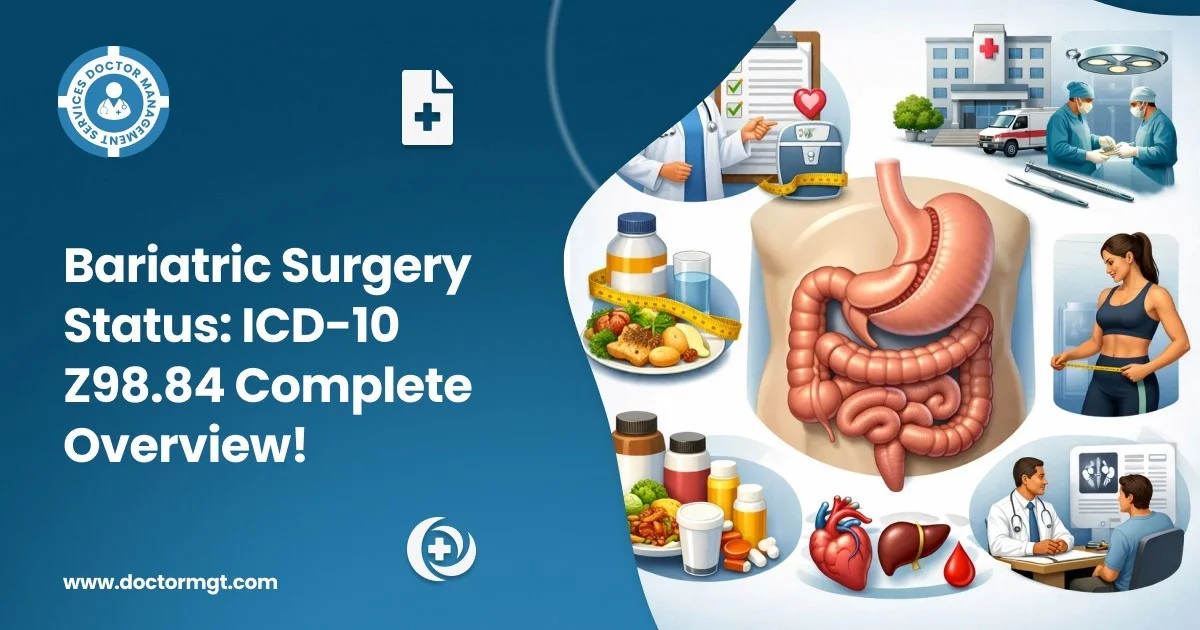
The ICD-10 code Z98.84 is a billable medical code assigned by the ICD-10 code system, which is used to indicate that a patient has a history of bariatric surgery. This does not imply that the surgery is in progress. Rather, it informs medical professionals, health insurance companies, and billing departments that the patient has already received a procedure such as a gastric bypass or sleeve gastrectomy.
This matters more than you might think. Why? Past bariatric surgery can affect everything from medication absorption to any upcoming treatment plans.
Why Z98.84 Matters in Patient Care?
Imagine a patient comes in with abdominal pain. When a provider is aware of the fact that they have undergone weight-loss surgery, the strategy shifts instantly. This could be due to complications, nutritional deficiencies or anatomical changes. This is why getting the right icd 10 code of bariatric surgery status is not only concerning billing, but also safe and informed care.
It also helps with:
- Monitoring the long-term bariatric surgery results
- Supporting medical necessity for certain treatments
- Making proper insurance claims.
Gastric Sleeve ICD 10: Where Does It Fit?
A lot of individuals enquire about gastric sleeve icd 10 codes. The plain and simple answer is that there is no separate code of status concerning gastric sleeve patients. Instead, Z98.84 is used to pay for all forms of bariatric surgeries after they are finished.
In case the procedure is being carried out, another procedural code is applied. However, when this is done, and the patient is returning to the clinic to obtain follow-up care, Z98.84 is the preferred choice.
Gastric Bypass Status ICD 10 Explained
The same logic applies to gastric bypass status icd 10. Regardless of whether the patient received a Roux-en-Y gastric bypass or any form of variation, the post-surgery status still falls within Z98.84.
To providers, this maintains documentation in order. To billing teams, it decreases the amount of confusion and denials of claims
You might also see searches for:
- icd 10 code for gastric bypass status
- bariatric surgery status icd 10
All of these point back to the same code: Z98.84.
Common Scenarios Where Z98.84 Is Used
Let’s make this practical. Here are a few everyday situations where this code comes into play:
1. Routine Follow-Up Visits
Patients usually come back to check on their nutrition, watch their weight, or lab results. Z98.84 assists in demonstrating the relevancy of such visits.
2. Managing Complications
Such problems as vitamin deficiencies, dumping syndrome, or surgical complications demand the appropriate record of previous surgery.
3. Pre-Surgical Evaluations
In case a patient requires a different procedure in the future, their bariatric history becomes relevant in terms of risk analysis.
Coding Tips You Shouldn’t Ignore
Coding may appear simple; however, minor errors may result in a claim rejection or hold-ups. Here are a few things to keep in mind:
- Always verify that the surgery has already taken place, and then use Z98.84
- Do not make it a major diagnosis unless it is directly related to the visit
- Combine it with other codes in reporting the complications or other related conditions.
Also, don’t confuse it with another ICD-10 code z98.890, which is used for “other specified postprocedural states.” That one is more general and does not relate to bariatric surgery specifically.
Documentation: The Backbone of Accurate Coding
Coding begins with proper documentation. When the provider does not specify the bariatric history of the patient, coders can only make assumptions and that’s never a good idea.
A proper note should include:
- Type of bariatric surgery performed.
- Date (if available)
- Any ongoing issues or follow-up care
Such detail assists in clinical attention and correction of billing.
The Role of Billing Teams in Bariatric Coding
Now let’s talk about the behind-the-scenes work. Coding is just one part of the process. Billing departments ensure that all are submitted in the proper way so that providers receive their payments.
This is where experienced general surgery billing and coding services can make a big difference. They know the intricacies of the surgical coding, such as bariatric surgery, and assist in minimizing the mistakes that may cost both time and money.
Similarly, a reliable Medical Billing Service ensures claims are processed smoothly, and reimbursements are not delayed.
Final Thoughts
Bariatric surgery changes lives, but it also adds complexity to medical records and billing. This is why it is important to learn the bariatric surgery status ICD 10 Z98.84.
It’s more than just a code.
It narrates a patient’s medical history and assists in future treatment. No matter whether you are a provider or coder or one of the team of billers, getting this right will be beneficial to all the parties involved.