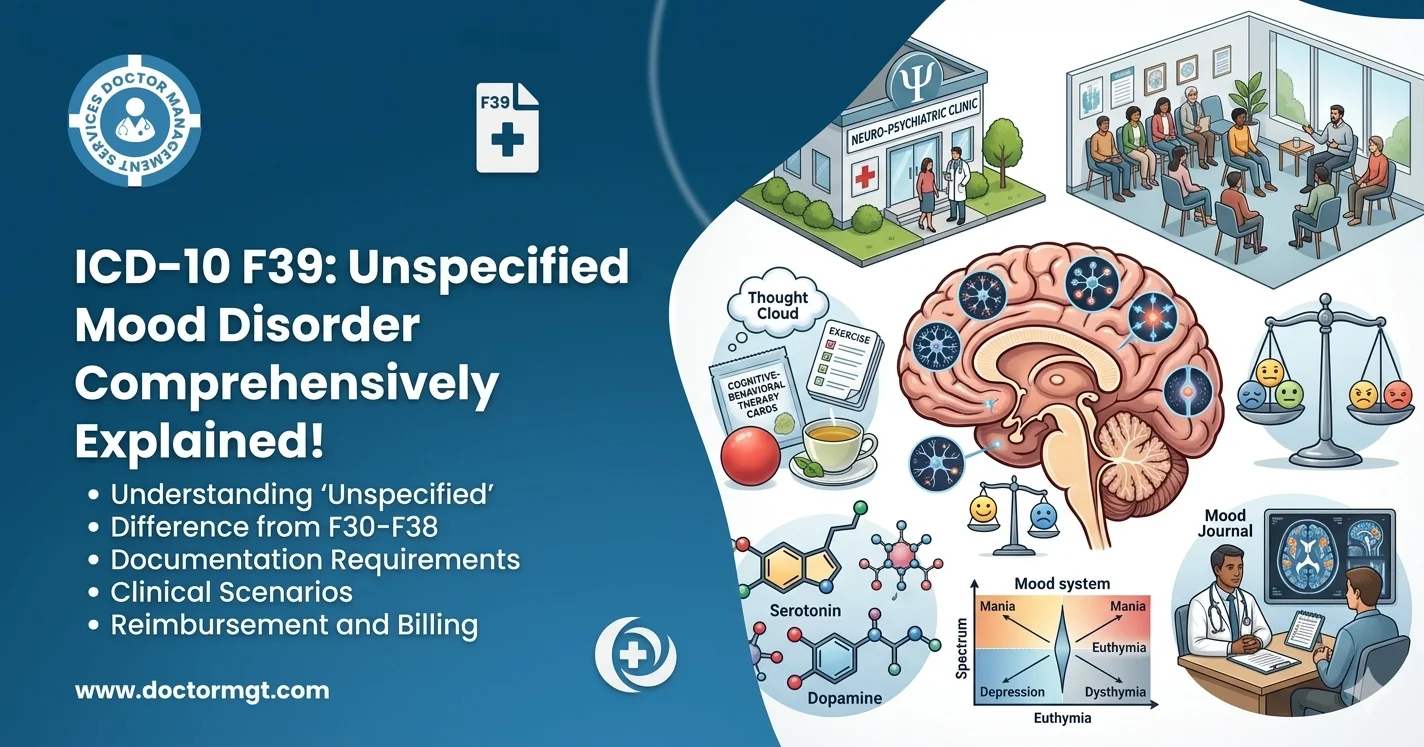



Being continuously depressed can be a lot until you see the doctor, and when they can’t confirm what makes you depressed or can’t diagnose if it’s depression or bipolar, it becomes more confusing. For that time, the medical code ICD-10 F39 is used.
The ICD-10-CM Official Guidelines for Coding and Reporting, jointly published by U.S. agencies including CMS and NCHS, state that diagnosis codes must be used at their highest level of specificity supported by documentation. This means unspecified codes like F39 should be used only when a more specific mood disorder diagnosis cannot be determined from the record.
Decoding ICD-10 F39: What Unspecified Mood Disorder Really Means
Basically, F39 is a temporary label that refers to a condition when a person feels not in the mood for quite some time, with continuous sadness or aggressive behavior.
For these symptoms, when providers can’t diagnose whether it is depression or bipolar disorder, they use the code ICD-10 F39 on a temporary basis and give medicine according to these diagnoses.
Sometimes, when Doctors are not quite aware of the patient’s history at that time, this specific code is used so that treatment can be started.
The Hidden Signs: Recognizing Mood Changes That Don’t Fit a Label.
Not all mood changes fit neatly into depression, anxiety, or bipolar disorder, and that’s where ICD-10 F39 comes in.
People have certain experiences in life that actually shift their mood, which is noticeable but don’t match any specific category. You might feel low energy or sudden sadness without a clear trigger, or sometimes moments of unusual happiness that seem out of place.
These subtle signs are easy to overlook, even by doctors. Recognizing them early is important because this can affect a person’s daily life, their relationships, and work. Paying attention to patterns and sharing your daily life observations with a healthcare professional can actually make a big difference.
How ICD-10 F39 Differs from Depression, Bipolar, and Anxiety Diagnoses
ICD-10 Mood Disorder Unspecified is quite different from depression, bipolar disorder, or anxiety because it’s used when symptoms don’t match any of these categories.
For example, you might feel persistent sadness but not enough to be labeled as major depression, or the mood swings that are not quite extreme enough for bipolar disorder. Anxiety may appear occasionally, but it’s not the main problem.
Doctors use ICD-10 mood disorder unspecified to describe these unclear patterns, so that your treatment can be started as early as possible. While the treatment started, behind the scenes, they are tracking your mental health and exploring therapies that address your unique symptoms.
Tracking Your Symptoms: Tools and Techniques for Better Diagnosis
Keeping track of your feelings can make a huge difference when dealing with Mood Disorder Unspecified ICD-10. Since your symptoms don’t fit neatly into depression or bipolar categories, especially at this time, noticing patterns is key.
You can start simple:
- Use a journal
- A mood-tracking app
This can help understanding your emotions, energy levels, sleep, and triggers each day. Even those small notes like “felt irritable after work because the manager said this” or “had sudden sadness in the evening because I couldn’t find something.”
Even these types of little notes will help your doctor see the bigger picture. Over time, these records make it easier to find the right treatment for you.
ICD-10 F39 and Insurance: What Patients Need to Know
When your doctor codes your condition as Unspecified Mood Disorder, ICD-10, it can affect insurance in ways you might not expect. Some insurance plans are quite strict about specific diagnoses like major depression or bipolar disorder, so claims for “unspecified” conditions may require extra paperwork.
Don’t worry! This doesn’t mean you won’t get coverage. Keeping detailed records of your symptoms and doctor visits helps your insurer understand your situation. Not only that, but asking your provider about coding can also be really helpful for you.
ICD-10 F39 and Insurance: What Doctors Need to Know
For doctors, when you use Unspecified Mood Disorder ICD-10 (F39) for a patient, you quickly realize insurance can be tricky. Many insurers prefer clear-cut diagnoses, so “unspecified” often raises questions.
That’s why patients’ notes matter more than ever. Write down exactly what symptoms the patient has, and any previous treatments you’ve tried. A few clear sentences explaining why the case doesn’t fit depression, bipolar, or anxiety can save a lot of hectic work with insurance.
Think of it like telling the patient’s full story; insurers need the full picture to approve therapy or medicines.
Also, there are so many USA medical billing and coding companies like Doctor Management Services & MedBill Collection that can help you go through the process smoothly and make sure you get your reimbursement in time.
Common Pitfalls When Diagnosing Mood Disorder Unspecified ICD-10
Diagnosing Mood Disorder Unspecified ICD-10 (F39) can feel like walking a tightrope. Symptoms don’t always fit neatly into depression, bipolar, or anxiety boxes, and that uncertainty can create problems, not just for treatment, but also with insurance. Here are some common pitfalls to watch out for:
- One big trap is being too vague about symptoms. If your notes just say “mood swings,” insurers often push back, and suddenly your patients end up with pending medical bills while the claim is questioned.
- Sometimes we assume mild symptoms don’t need full documentation. That’s risky; missing details can delay treatment approvals.
- Not ruling out depression, bipolar, or anxiety before labeling it F39 is another common mistake. Insurers thoroughly notice these minor details.
- Forgetting to include prior treatments in the chart? That’s a red flag for insurance and can create unnecessary delay.
- Lastly, inconsistent follow-ups make it hard to show progress. Without clear records, insurers may hold payments.
Conclusion
Dealing with icd 10 unspecified mood disorder can feel confusing at first, but it doesn’t have to be overwhelming. There are so many mental health billing services that help you by making sure you get proper treatment. Keeping track of your symptoms while talking openly with your doctor can make treatment smoother and prevent unnecessary medical bills.
Remember, this code is just a starting point it helps doctors understand your unique mood patterns and get you the care you need.