


Recent studies show that the mammography done by AI (artificial Intelligence) is 20% more effective in detecting “interval cancer”, which are cancers that develop or become apparent between two scheduled screening scans
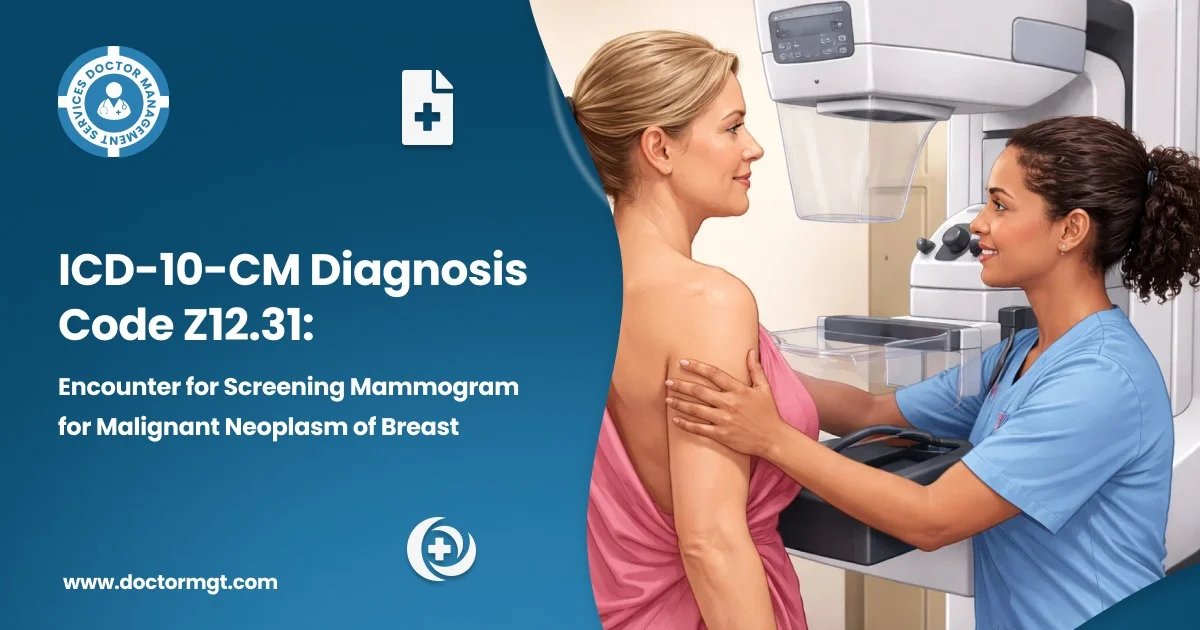
Basically, Z12.31 ICD-10 is a billable code used for preventive breast cancer screenings to detect any type of lump in the breast or underarm area. This code is specifically used when the patient shows no symptoms of breast disease (no lumps or any type of discharge).
Now, about coding, it is not easy when it comes to diagnosis, but it is far more difficult to write code precisely because the type of symptoms you show, every symptom would fall into a different coding category.
Let’s explore this blog and get to know more about the encounter for screening mammogram for malignant neoplasm of the breast.
Understanding ICD-10-CM Code Z12.31
ICD-10-CM Code Z12.31 is used when someone goes for a screening mammogram to check for breast cancer. They do this even if they feel completely normal and have no complaints.
This visit is not because of pain, a lump, or any visible change. It is simply a step to make sure everything is okay. In fact, there are no symptoms linked to this code at all. That’s exactly why this code is important.
Breast cancer in its stages often does not cause any noticeable signs. That is why doctors recommend screenings. They especially recommend this for women over 40 or those with a family history of breast cancer. So instead of waiting for a problem to show up, this screening is done to catch anything early.
Also, it is quite important to understand that if a patient does have symptoms like a lump or breast pain, nipple discharge, or changes in shape or size, then ICD-10-CM Code Z12.31 will not be used. For those cases, a diagnostic code will be applied.
Therefore, Z12.31 diagnosis code represents a “just to be safe” visit, where the goal is early detection and peace of mind.
Age and Risk Factors for Screening Mammograms
Women usually start getting mammograms around age 40. Some may need them earlier if breast cancer runs in the family or if they have other risk factors. Situation like past breast issues, genetics, or certain lifestyle can also affect where providers recommend screening.
When someone comes in for a screening mammogram, doctors record it using the ICD-10-CM diagnosis code Z12.31. This shows it is a routine checkup and not because of any symptoms. Using a radiology billing company helps make sure the code is entered correctly, so that everything stays clear for the patient and the practice.
Proper Use of Screening Mammogram Codes
When you’re dealing with screening mammograms, using the right code really matters. It’s not just about filling in a number; it tells the whole story of why the patient came in.
- Was it a routine check?
- Is there any symptom?
- Was there a history?
All of that changes the code. A lot of people mix these up between screening and diagnostic visits. This can lead to claim issues or confusion later.
So, let’s make it simple and clear with a quick chart you can follow.
Common Codes Related to Screening Mammograms
|
Code |
Description | When to Use It |
|
Z12.31 |
Encounter for screening mammogram for malignant neoplasm of the breast | Use this when the patient has no symptoms and is coming in for a routine breast cancer screening |
| Z12.39 |
Encounter for other screening for malignant neoplasm of the breast |
Use when screening is done, but not specifically a mammogram |
|
Z80.3 |
Family history of malignant neoplasm of the breast |
Use as an additional code if the patient has a family history of breast cancer |
| Z85.3 | Personal history of malignant neoplasm of the breast |
Use when the patient had breast cancer before, but is now coming for routine screening |
| R92.8 | Other abnormal and inconclusive findings on diagnostic imaging of the breast |
Use when the screening shows something unclear, and further testing is needed |
| N63 | Unspecified lump in the breast |
Use when the patient comes in with a breast lump (not screening anymore) |
Now here’s the easy way to think about it: if the patient walks in feeling completely fine and just wants a check, ICD-10-CM Code Z12.31 is your go-to code. But the moment there is a symptom like a lump or pain, it is no longer a screening. You switch to a different code. You can also add extra codes (like family or personal history) to give a fuller picture.
Coding and Billing Guidelines You Shouldn’t Miss
When it comes to screening mammograms, getting the billing right is super important. It is not paperwork. Using the codes ensures that the patient is not charged incorrectly. Mixing up codes can cause claim problems. To avoid this type of confusion, you can also consult with a medical billing and coding specialist in order to make things go more smoothly.
Here are some simple guidelines to keep in mind:
1. Use Screening Codes Only for Preventive Visits
ICD-10 screening mammogram code Z12.31 is for patients who have no symptoms. If the patient has a lump, pain, or nipple discharge, switch to a diagnostic code.
2. Document Everything Clearly
Document Everything Clearly. Make a note when the patient came in for a mammogram. Note down any family history. Write down if there were no symptoms.
3. Add History Codes When Relevant
If the patient has a family history (Z80.3) or personal history (Z85.3) of breast cancer, which includes those codes too. They don’t replace the screening code, but give quite a full picture.
4. Double-Check Insurance Rules
Some insurers have age or frequency requirements for coverage. Using the code helps ensure the claim gets approved without any delay.
5. Avoid Common Mistakes
Do not mix screening and diagnostic codes. Do not forget to write down supporting history codes. Not forget to document the patient’s symptom status
In short, think of coding and billing like giving a story: who came in, why they came, and what was done. When you follow these guidelines, everything falls into its place.
Final Thoughts on Screening Mammograms
Routine breast screenings are a simple but powerful way for women to take care of their health.
The Encounter for Screening Mammogram for Malignant Neoplasm of Breast shows the appointment is preventive, not because of a problem.
This keeps medical records clear and also makes it easier for insurance claims to get approved, whether through private plans or one of the many USA insurance companies that cover preventive care. These screenings do more than check a box; they can spot issues early and give patients peace of mind.