

Did you know that more than 25 million people in the United States speak English less than “very well,” according to the U.S. Census Bureau. In healthcare, even a small misunderstanding can lead to the wrong diagnosis, delayed treatment, or serious legal problems.
This is why language support in clinics and hospitals is not a choice; it is a necessity.
The roles of a medical interpreter and a medical translator are misinterpreted by not only providers, but also patients. The two are very similar and yet do completely different jobs. Whether you practice, manage a hospital, or handle personal injuries, understanding the distinction will save your patients and your income.
Let’s break it down clearly.
What Is a Medical Interpreter in Healthcare?
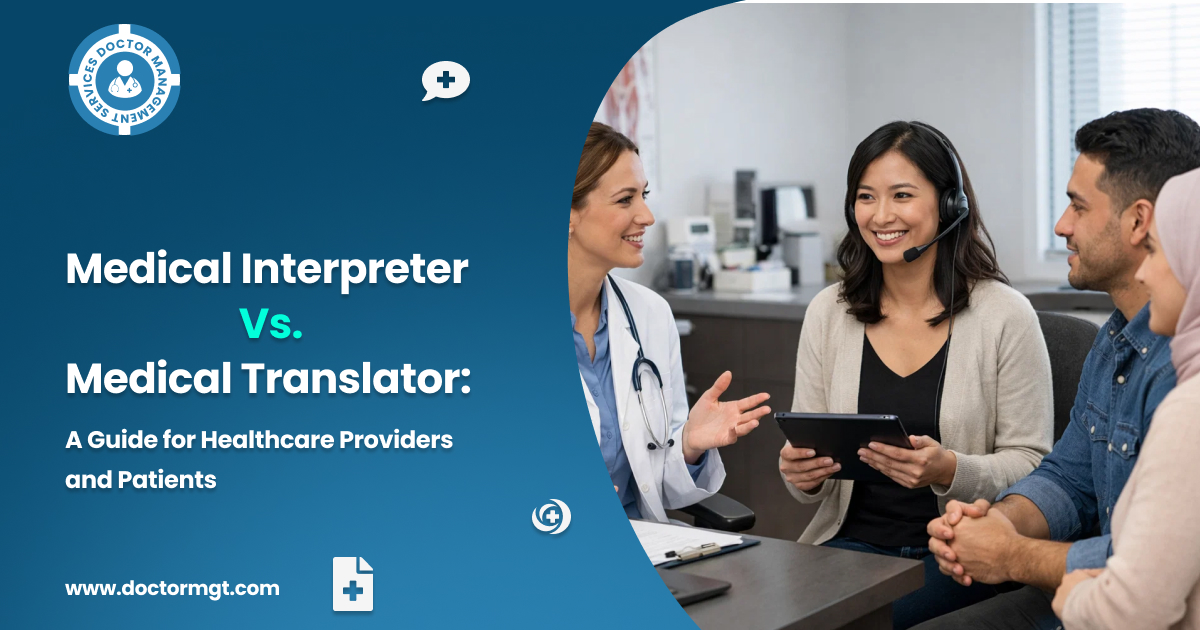
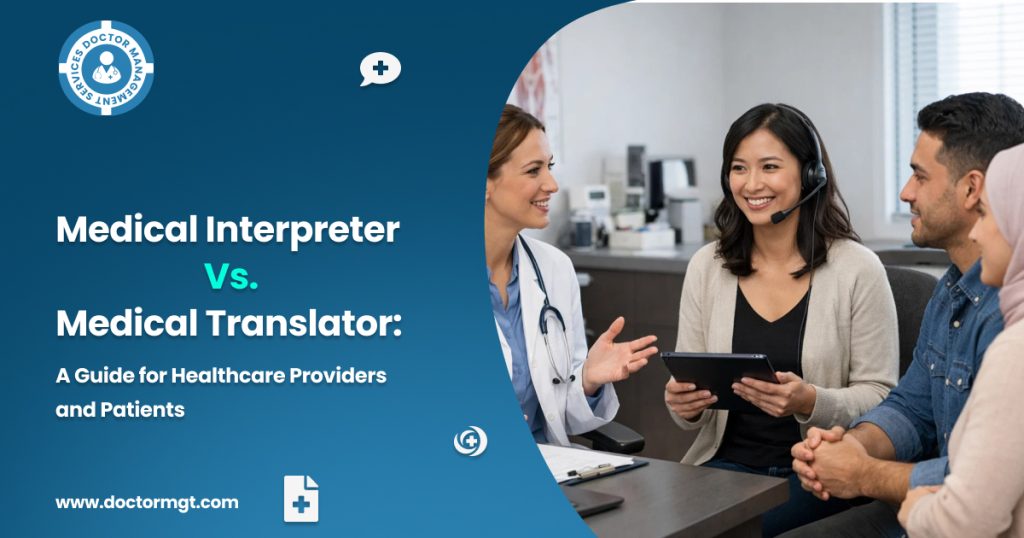
A medical interpreter assists patients and healthcare providers to communicate effectively in real time in a clinical encounter.
They are required to be supported in numerous contexts, such as doctor visits, emergency rooms, surgery checks, mental health appointments, and physical therapy assessments. The interpreter not only listens to the words spoken by the provider carefully, but they also make the right conversion of what the provider is saying into the language of the patient and vice versa.
This communication occurs without any delay, thus ensuring that both parties know what the other is saying. The interpretation of the medical process may occur face-to-face within the examination room, via phone, or via secure video remote services, depending on availability and urgency.
Professional medical interpreters need to be well-informed of medical terminology, anatomy, medications, and treatment procedures.
They also learn standards of confidentiality and ethical codes to preserve patient privacy and to see to it that no conversation is inaccurate, biased, or incomplete.
Under Title VI of the Civil Rights Act of 1964, any healthcare provider receiving federal funding must provide meaningful language access to patients with limited English proficiency. This is enforced through guidance from the U.S. Department of Health and Human Services.
Failing to provide proper interpretation can lead to civil rights complaints and liability claims.
What Is a Medical Translator?
A medical translator does not deal with oral communication, but written documents. They translate such materials as:
- Consent forms
- Discharge instructions
- Lab reports
- Insurance forms
- Surgical summaries
- Legal documentation
Translators, unlike interpreters, have time to study terms and make things accurate in writing. They should be very accurate in their work as patients are guided by such documents to adhere to care plans safely.
For example, a translated medication instruction sheet must be exact. One word change could result in incorrect dosage and harm.
Key Differences Between Medical Interpreter and Medical Translator
Though they are similar in sound, these two professionals are used in very different capacities within hospitals, clinics, and specialty practices.
Here’s a simple comparison:
|
Medical Interpreter |
Medical Translator |
|
Works with spoken communication |
Works with written documents |
|
Real-time conversation |
Document-based translation |
|
Often present during appointments |
Works behind the scenes |
|
Requires quick thinking |
Requires detailed document accuracy |
The two roles demand excellent medical expertise and experience in patient privacy policies such as HIPAA.
Why Healthcare Providers Must Understand the Difference
Confusing these roles can actually create serious problems.
Suppose that a written translator was used when a live surgical consultation was going on. Or to call in an untrained bilingual employee to translate complicated oncology treatment plans. That increases risk.
Research papers published by the National Institutes of Health demonstrate that medical errors and patient outcomes are better in cases of professional language support.
Professionals should not rely on family members as interpreters but rather engage professionals to translate.
The Legal and Compliance Side of Language Services
Language access is mandatory in healthcare organizations as:
- The Civil Rights Act of Title VI.
- Section 1557 of the Affordable Care Act.
- State-level patient protection laws.
Failure to do so can lead to investigations, fines, and litigation. In the case of providers dealing with injuries or care related to litigation, documentation becomes even more crucial.
Inappropriately translated injury assessment may affect the value of a case or negotiations. This is where professional billing and collection procedures relate to language services directly.
The Financial Impact of Language Services in Healthcare
The support of language is not simply about communication. It also affects revenue. Poor documentation, which is a result of misinterpretation, may cause:
- Claim denials
- Coding errors
- Reimbursement delays
- Disputed medical records
In case interpretation sessions are billable, these should be properly recorded. This is where a medical interpreter billing service is useful. It makes sure that language services are coded and reimbursed appropriately in case they are covered by the payer guidelines.
When working with a complex reimbursement system, particularly in accident-related cases, the incorporation of interpreter charges into an organized workflow enhances financial performance. Accuracy in documentation has a direct influence on settlements in most personal injury cases. This is the reason why Medlegal Collections processes are valuable in an organized manner. Clearly written records, which have been translated in a proper manner and with correct interpretation notes, allow attorneys to make stronger arguments.
Specialty clinics and hospitals also count on structured RCM billing collections infrastructure to handle reimbursement based on long-term patient services, such as interpreter assistance. Without proper tracking of these services, revenue is lost.
Language access is no longer just a compliance issue. It is part of the revenue cycle strategy.
When Do You Need Both Services?
There are numerous clinical cases that demand the presence of an interpreter and translator. For example:
1. One of the patients visits the emergency department
2. Interpreter helps in evaluation
3. The written instructions of discharge should then be translated.
The total language support in high-risk specialties, including cardiology, orthopedics, and trauma care, lowers readmission rates and enhances adherence to treatment.
However, in the case of practices that handle injury documentation, timely reimbursement processes are enhanced by combining correct interpretations with translated medical records to enhance the clarity of the cases.
How to Choose the Right Language Support Provider
It is critical to choose the appropriate language support partner to ensure patient safety, adherence to the law, and effective operations. Before making a decision, providers must pay closer attention to qualifications, training, and compatibility of the system. The healthcare providers must seek:
- Qualified medical interpreters
- Clinical setting experience
- HIPAA compliance training
- Well-defined standards of documentation
- Billing systems integration
For translators, verify:
- Knowledge in medical terminology
- Proofreading protocols
- Knowledge in legal paperwork
- Consent and insurance form experience.
In case your organization works with large numbers of multilingual patients, a combination of professional language services and responsible billing controls ensures that you do not lose revenues.
The Patient Experience: Why It Truly Matters
From a patient’s perspective, language support is about dignity.
A patient discussing cancer treatment, pregnancy complications, or surgical risks must fully understand what is happening. Clear communication:
- Reduces fear
- Improves compliance
- Builds trust
- Lowers readmission risk
Patients who feel heard are more likely to follow treatment plans and return for follow-up care.
For providers, this means better outcomes and a stronger community reputation.
Why This Difference Truly Matters?
The role of medical interpreters and medical translators is different and equally significant. One deals with real-time verbal communication. The other one makes written records correct and clear. Providers that adhere to this distinction safeguard:
- Patient safety
- Legal compliance
- Clinical accuracy
- Revenue integrity
Clarity of language is a source of trust to patients. The process of healthcare communication is associated with fear, pain, and vulnerability. The understanding diminishes anxiety and enhances cooperation.
To the providers, effective communication can help minimize malpractices and guard against reimbursement. The documentation is more effective, the claims are faster, and the legal disputes are unlikely. Although it might appear that medical interpreters and medical translators are similar, they have different and crucial purposes. Live conversations are handled by one.
The other guarantees written accuracy. It is clear that different safeguards affect the quality of clinical care, legal issues, and financial stability. Language support is no longer an option in the modern, diverse healthcare environment. It is an essential component of providing responsible and safe care.
Understanding that difference protects clinical quality, legal compliance, and financial stability. In today’s diverse healthcare environment, strong language support is no longer optional. It is a core part of delivering safe and responsible care.