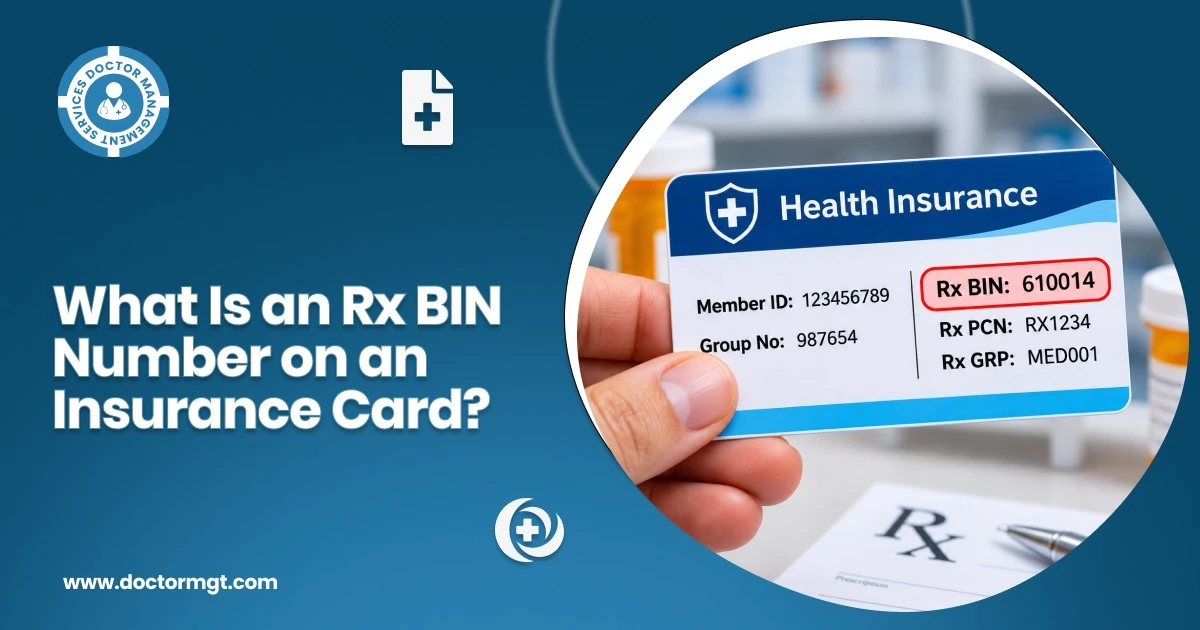





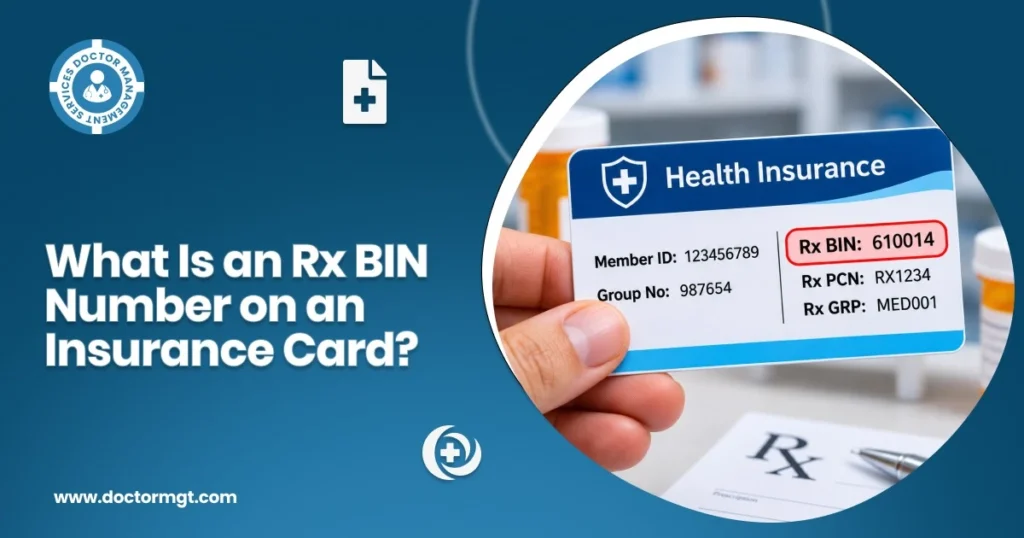
The Rx BIN number (prescription bank identification number) is a six-digit code that is printed on many health insurance or prescription cards that helps pharmacies send a claim to the appropriate PBM (pharmacy benefit manager). If you have ever wondered what the terms ‘RxBIN,’ ‘RxPCN,’ and ‘RxGrp’ on the side of an insurance card mean, the short answer to that is that these terms work together to make sure that a prescription claim reaches the right coverage system and follows the whole process without any delays.
This guide explains what the Rx BIN number means, where to find it, how it works in pharmacy claims, and how it differs from the PCN, group number, and member ID.
What Is an Rx BIN Number for Health Insurance, and What Is Its Importance?
The Rx BIN works like a general routing number. It tells the pharmacy system which processor should receive the claim. The RxBIN is a six-digit routing number that sends a pharmacy claim to the correct processor. The word “bank” in the name is historical, and an RxBIN has nothing to do with your bank account or personal financial information. In the credit card industry, BIN/IIN codes identify the institution that issued a card.
The Rx BIN number meaning is straightforward: it identifies the electronic destination for a pharmacy claim. When a pharmacy submits a prescription claim, the Rx BIN tells the transaction system which pharmacy benefit processor or payer network should receive and adjudicate it.
In practical terms, the Rx BIN helps the pharmacy system answer:
“Which electronic pharmacy should receive this claim?”
Which “Rx” Number Means What?
A simple pharmacy claim doesn’t go directly to an insurance company; instead, it is sent to a designated company. Once the claim arrives, it is the coordinator’s job to describe how the benefits are applied.
Most commonly known, “Rx BIN” is one part of what CMS calls the “4Rx data,” a collection of pharmacy-benefit ID numbers:
- RxBIN (bank identification number) is mostly used for pharmacy forwarding.
- RxPCN that is (Processor Control Number): it is a more specific way of applying when possible.
- RxGRP (Group Number) helps recognize a group of drug-coverage or arrangement plans.
- RxID (Identification Number): It is used to recognize the cardholder or a person who is covered by insurance.
It is clarified by the CMS that these four Rx elements are needed for coordination of the claim. The Rx BIN is always needed to route a pharmacy claim. It sends the claim to the processor or network in charge of processing the prescription benefit. Even though they can improve that routing, the PCN and group number do not take the role of the Rx BIN.
How to Find Rx BIN on Insurance Card? And Its Visibility On A Card
It is really simple to find the Rx BIN number on an insurance card because it is usually printed directly on the pharmacy section on the insurance card. It can appear either on the front or back depending on your company’s card design.
Look for labels like:
- RxBIN
- Rx BIN
- BIN
- Prescription BIN
- Pharmacy BIN
- Benefit Identification Number
Even though the format of the card can vary, it is still usually six digits.
Where to find the Rx BIN number
Placement on the Card |
Typical label |
What it means |
| Front of card | RxBIN: 123456 | The primary pharmacy-claim routing number |
| Back of card | Rx BIN, BIN, or Pharmacy BIN | Same purpose; location varies by insurer |
| Pharmacy section | RxBIN, RxPCN, RxGrp | The prescription-benefit routing details |
| Separate pharmacy card | Rx BIN, PCN, Group | Some plans issue a separate prescription card |
View the member site, give the card’s customer support number a call, or ask your pharmacist for some help if you cannot find an Rx BIN.
Step-By-Step Process Of How an Rx BIN Works
When you drop off or refill a prescription, the pharmacy does more than simply hand the medication to you; it also looks into online transactions to check whether a prescription is covered and what the patient owes. The RxBIN is the main component to complete this process.
Step 1: You present your insurance card. The pharmacist or technician enters the RxBIN, PCN if present, Rx group number, and member ID.
Step 2: The pharmacy system builds the claim. It includes the drug, strength, quantity, days’ supply, prescriber information, and your insurance identifiers.
Step 3: The Rx BIN routes the claim. The six-digit BIN directs the transaction to the appropriate PBM, insurer, or processor.
Step 4: The processor adjudicates the claim. It verifies eligibility and applies plan rules such as formulary status, copay, deductible, refill-too-soon limits, and prior authorization requirements.
Step 5: The pharmacy receives a response. The response indicates whether the claim was paid, rejected, or requires additional action.
Step 6: After the claim is approved, the pharmacy accepts the copay, and you just pay your share, and your medication is in your hand.
Without the right BIN, the pharmacy could send the claim in the wrong direction, and that can cause different issues such as “invalid BIN” or an incorrect return response.
Rx BIN vs. Rx PCN: How They Work Together
Both the Rx BIN and Rx PCN mainly support pharmacy-claim routing, but they are also used for different purposes in different situations.
Rx BIN:
A six-digit Benefit Identification Number that routes the claim to the appropriate drug-benefit network.
Example: 654321
Rx PCN:
A processor control number that may provide additional routing precision within the payer network.
Example: XYZ321
Requirement:
The Rx BIN is always needed. The Rx PCN is used only when the plan requires it.
Practical example:
The Rx BIN is the main routing identifier, and the Rx PCN can add a more specific processing pathway when the plan uses one.
Practical difference:
The Rx BIN gets the claim to the correct general routing destination, while the Rx PCN may direct it to a more specific processing pathway or benefit arrangement.
Many organizations lately use the RxPCN, but not all pharmacy payers do. A detailed explanation of what PCN is on an Insurance Card can make the process smoother.
Understanding the Difference Between Rx BIN, Member ID, and Rx Group Number
Knowing the difference between the Rx BIN, member ID, and Rx group number is important in understanding how the prescription claims are submitted.
Rx BIN vs. Member ID: Which Is Better for Claim Routing?
The Rx BIN and member ID serve different purposes and should not be confused. The Rx BIN is a six-digit routing identifier that directs a pharmacy claim to the correct drug-benefit processor, while the member ID, also called the Rx Insured ID, identifies the covered individual and supports eligibility verification.
In practical terms, the Rx BIN tells the pharmacy where to send the claim, whereas the member ID tells the processor whose coverage is being used. CMS identifies both the RxBIN and Rx Insured ID as required identifiers for certain network pharmacy-benefit coverage types.
Both fields may be necessary for a pharmacy claim to process correctly. The Rx BIN supports network drug-benefit routing, while the member ID supports cardholder identification.
Rx BIN vs. Rx Group Number: How the Routing Number Differs From the Coverage Group
The Rx group number, also called RxGRP or Rx Group, identifies the drug-coverage group or plan arrangement. A six-digit Rx BIN routes the claim to the correct pharmacy network, while the Rx group number helps distinguish one drug plan or coverage arrangement from another.
Rx BINs are always six digits, whereas the Rx group number may be up to 15 characters in CMS reporting. Routing depends on the BIN, which is always needed. The Rx group number may be required depending on the plan and coverage type. Initial claim routing relies on the BIN, while the group number may provide more specific coverage identification. CMS materials state that the group number may provide more precise routing when the benefit administrator requires it, but it is not a substitute for the BIN; it is an additional identifier that may help distinguish one drug plan or coverage arrangement from another.CMS materials state that the Rx group number may provide more precise routing when required by the benefit administrator, but it is not a substitute for the Rx BIN; it is an additional identifier that may help distinguish one drug plan or coverage arrangement from another.
Why Accurate Rx BIN Information Matters for Pharmacy Claims
For transfers that are totally digital, the Rx BIN is used by many pharmacy claims. Effective claims management helps ensure that patient, coverage, and billing information is submitted correctly, processed efficiently, and resolved without unnecessary delays.
The following are some of the issues that can occur with incorrect or missing pharmacy-related information:
- The claim cannot be routed to the correct processor.
- The pharmacy cannot verify eligibility or benefit coverage.
- The claim may be rejected or require manual follow-up.
- The patient may be asked to provide updated insurance information.
- The pharmacy may need to contact the payer or plan for correct routing details.
The RxBIN, PCN, group ID, and cardholder ID are basic data verification required for claims routing. That means correct card intake is extremely important for all the parties involved, whether they are the pharmacies, payers, or patients themselves.
Related Payer Identifier and Billing Resources
While the Rx BIN applies specifically to pharmacy benefits, payer IDs serve a similar purpose in medical billing by helping identify the correct payer or clearinghouse pathway. The Rx BIN is one of the many identifiers that help healthcare organizations route and process insurance claims efficiently.
The right payer information supports the submission of a clean claim, lowers errors in routing, and helps avoid rework. It is helpful to study ‘payer ID’ for an even better understanding of payer identifier-related issues.
What If the Rx BIN Is Missing? What to Look For?
Not every insurance card displays an Rx BIN in a prominent place. Some plans use a separate prescription card, while others include pharmacy details on the reverse side of the medical card.
If the Rx BIN is not visible: Check both sides of the insurance card. Look for a separate pharmacy or prescription-drug card. Review the member portal or digital ID card. Contact the plan using the customer-service number on the card. Ask the pharmacy to help verify the current pharmacy-benefit information.
Know that the RxBIN is always needed, while the RxPCN should be supplied only if the drug plan uses one. This means a missing PCN does not necessarily mean the card is incomplete, but a missing or incorrect RxBIN can create a routing problem.
Final Thoughts: Rx BIN Number Keeps the Claims Moving
The Rx BIN may seem like a small detail, but it plays an important role in routing pharmacy claims correctly, verifying eligibility, and keeping claims moving toward payment. Capturing complete insurance information, including the Rx BIN when applicable, can help practices reduce rejections, avoid delays, and minimize unnecessary follow-up.
If your practice wants to improve insurance verification, streamline claim submission, or strengthen its revenue-cycle workflow, professional medical billing services can provide the support needed to keep claims accurate and payments on track.
Frequently Asked Questions
Q1. Is the Rx BIN the same as a policy number?
No. The Rx BIN is a pharmacy-claim routing identifier. The policy or member number identifies the coverage and the covered person. CMS distinguishes the RxBIN from the Rx Insured ID for this reason.
Q2. Is the Rx BIN always six digits?
In the CMS and NCPDP contexts described here, the RxBIN is a six-digit field. CMS specifically identifies it as a six-digit number in several reporting and plan-communication guides.
Q3. Do all plans use a PCN?
No. CMS states that some, but not all, of the electronic pharmaceutical companies use an RxPCN for routing along with the BIN.
Q4. Can the Rx group number match the medical group number?
Sometimes, but not always. The Rx group is a pharmacy-benefit identifier, separate from the medical group number, so the two can be the same or different. Check your card to confirm.
Q5. Does the Rx BIN determine my copay?
Not directly. The Rx BIN routes the claim to the correct processor. Once the claim reaches that processor, the plan applies its coverage rules, including formulary status, deductible, copay, and other cost-sharing requirements.
Resources
- CMS—NCPDP Pharmacy Identification Specification Information: Explains RxBIN, RxPCN, and RxGrp, including the six-digit RxBIN format. https://www.cms.gov/Medicare/Prescription-Drug-Coverage/PrescriptionDrugCovContra/Downloads/NCPDP-Pharmacy-Identification-Specifications-Information.pdf
- CMS — Medicare Part D Plan Communications User Guide: Defines the 4Rx data elements: RxBIN, RxPCN, RxGRP, and RxID.
https://www.cms.gov/research-statistics-data-and-systems/cms-information-technology/mapdhelpdesk/downloads/pcug-main-guide-v92-august-28-2015.pdf - CMS—DSA Supplemental Drug Coverage Reporting User Guide: Confirms RxBIN is used for pharmacy routing and that not all plans use RxPCN.
https://www.cms.gov/Medicare/Coordination-of-Benefits-and-Recovery/Prescription-Drug-Assistance-Programs/Downloads/DSA-User-Guide-Supp-03012016.pdf - NCPDP — Processor ID (BIN) Information: Explains the six-digit NCPDP Processor ID/BIN and the role of PCN in electronic pharmacy claims.
https://www.ncpdp.org/NCPDP/media/pdf/Resources/NCPDP-Processor-ID- - NCPDP — Overview of the Medicare Part D Prescription Drug COB Process: Defines RxBIN, RxPCN, and RxGRP as pharmacy routing identifiers.
https://www.ncpdp.org/NCPDP/media/pdf/WhitePaper/OverviewMedicarePartDPrescriptionDrugCOBProcess.pdf
Related guides