




If you have ever flipped over your health or prescription insurance card and wondered what all those abbreviations mean, you are not alone. Most people recognize fields like Member ID or Group Number, but PCN often gets overlooked. Yet this small code plays a surprisingly important role every time you fill a prescription or your provider submits a claim on your behalf.
This guide breaks down exactly what PCN means, why it matters, and how it fits into the broader healthcare billing system, whether you are a patient, a provider, or someone managing benefits.
What Does PCN Stand For?
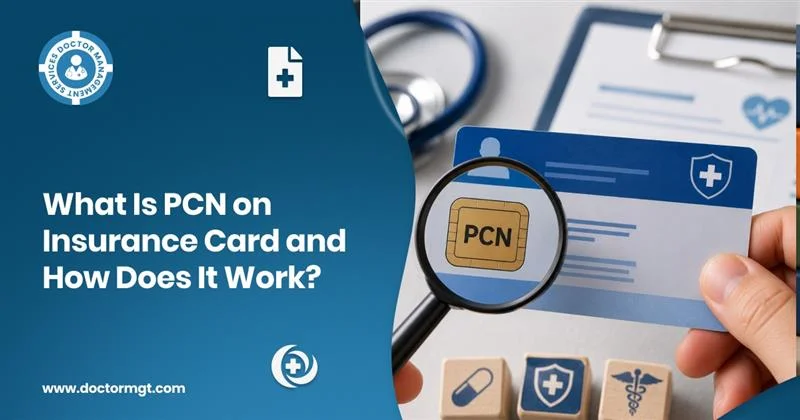
PCN stands for Processor Control Number. It is a code printed on your insurance card, typically alongside your BIN (Bank Identification Number) and Group Number, that helps pharmacies and insurance systems route prescription drug claims to the correct processor.
Think of it as a sorting code for your benefits. When a pharmacy submits a claim for your medication, it uses the BIN to identify the pharmacy benefits manager (PBM) and the PCN to identify the specific plan or sub-group within that manager’s system.
Without the correct PCN, a claim can be rejected, routed to the wrong plan, or result in incorrect cost-sharing for the patient.
Where Is the PCN Located on Your Insurance Card?
Your PCN is printed directly on your insurance card, usually on the front or back. Look for it labeled as:
- PCN
- Proc Ctrl Num
- Processor Control Number
It typically appears in the pharmacy benefits section of the card, near the BIN and RxGrp (Rx Group Number) fields. If your plan separates medical and pharmacy coverage, the PCN will be on the pharmacy side.
Here is a quick example of what those fields might look like together:
|
Field |
Example Value |
|
BIN |
004336 |
| PCN |
ADV |
|
Group |
RX1234 |
| Member ID |
00123456789 |
How Does the PCN Work in Practice?
When you walk into a pharmacy and hand over your insurance card, the pharmacist enters your BIN, PCN, Group Number, and Member ID into their system. This triggers an electronic claim that goes through the following path:
1. BIN routes the claim to the correct pharmacy benefits manager (such as CVS Caremark, Express Scripts, or OptumRx)
2. PCN identifies the specific plan, sub-plan, or benefit program within that PBM
3. Group Number narrows it down further to your employer or plan group
4. Member ID confirms your individual eligibility
All of this happens in seconds. The PBM responds with coverage details, copay amounts, and whether the drug is covered under your formulary before you even reach the register.
Why the PCN Matters More Than You Think?
The PCN is not just administrative noise. It directly determines:
- Which formulary applies to your prescription (what drugs are covered and at what tier)
- Your out-of-pocket cost for each medication
- Whether prior authorization is required
- Which pharmacy network you need to use for the best coverage
If a pharmacist enters the wrong PCN, your claim may process under the wrong plan, leading to a higher copay, a coverage denial, or a confusing bill later. This is why providers and pharmacy staff are trained to verify all fields on the card, not just the Member ID.
PCN and Major Health Insurance Companies
Major health insurance companies like Doctor Management Services, Aetna, Cigna, Blue Cross and Humana all use PCN codes as part of their pharmacy claims infrastructure. However, these companies often work with third-party PBMs to administer prescription benefits, meaning the PCN on your card may belong to the PBM, not the insurer directly.
For example, a member with a Cigna medical plan might have their pharmacy benefits managed by Express Scripts. The PCN on their card would route claims through Express Scripts’ system, even though the overall plan is Cigna-branded. Understanding this distinction helps patients and providers avoid confusion when a pharmacy claim behaves differently from a medical claim.
It is also worth noting that not every insurance card will have a PCN. Some plans, especially those with limited pharmacy benefits or standalone medical coverage, may leave that field blank. When PCN is absent, the BIN alone is often sufficient for claim routing.
PCN in Medical Billing: Beyond the Pharmacy Counter
While PCN is primarily a pharmacy billing tool, understanding it is increasingly relevant in broader healthcare billing contexts, including specialty practices. For instance, a chiropractic billing service that handles patients with prescription components or coordinates care with pharmacy benefits will encounter PCN codes when verifying patient coverage or coordinating benefits across systems.
When a chiropractic or physical therapy clinic bills for services alongside medication management, accurate insurance verification including confirming PCN data ensures there are no coverage gaps or claim mismatches between the medical and pharmacy sides of the patient’s plan.
Incorrect or missing PCN information is a common but overlooked source of claim delays and patient balance surprises.
Common PCN-Related Issues and How to Avoid Them
Both patients and providers run into PCN-related problems. Here are the most frequent ones and how to prevent them:
For patients:
- Always carry your insurance card with you to appointments and the pharmacy
- If you recently changed plans or employers, verify that your new card has an updated PCN before filling prescriptions
- If a claim is rejected at the pharmacy, ask the staff to verify they entered the PCN correctly not just the Member ID
For providers:
- Collect and document all fields on the insurance card during intake, including PCN, BIN, and Group Number
- Train front desk and billing staff to distinguish between medical and pharmacy benefit sections on the card
- When in doubt, call the member services number on the back of the card to confirm the correct PCN for the plan
How PCN Fits into the Bigger Billing Picture
Healthcare billing in the United States is one of the most complex administrative systems in the world. A single patient visit can generate multiple claims across medical, pharmacy, and ancillary benefit lines each with its own identifiers, codes, and routing logic.
A reliable medical billing service in USA will be familiar with all of these identifiers, including PCN, and will have verification workflows that catch errors before a claim is submitted. Whether you are billing for a primary care visit, a specialist consultation, or a pharmacy claim on behalf of a patient, getting the foundational identifiers right is what separates a clean claim from a costly denial.
Conclusion: Small Code, Big Impact
The PCN on your insurance card is a small string of letters or numbers that most people never think about until a prescription claim gets rejected or a bill comes back with an unexpected balance. Understanding what it is, where to find it, and how it works gives both patients and healthcare providers a meaningful advantage in navigating the billing process.
If you are a patient, take two minutes to locate your PCN before your next pharmacy visit and confirm it matches your active plan.
If you are a provider or billing professional, make insurance verification, including PCN confirmation, a non-negotiable step in your intake workflow. It is one of the simplest ways to reduce claim denials and protect your patients from unnecessary out-of-pocket costs.